
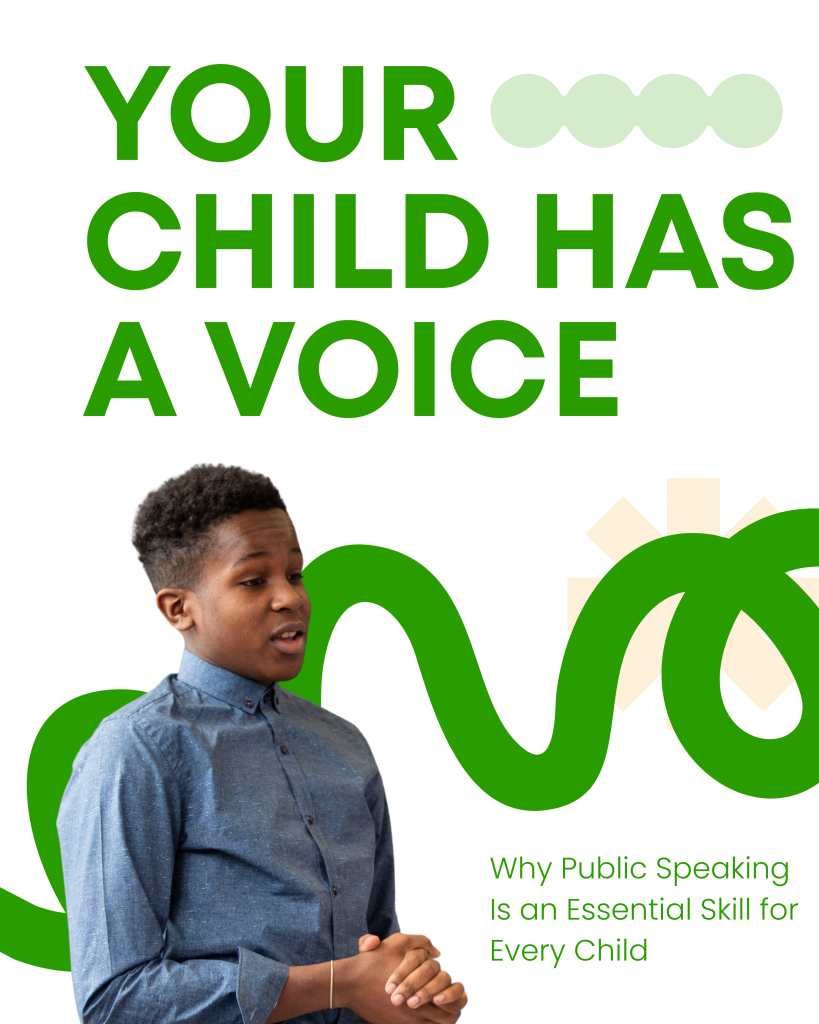
Why Public Speaking Is an Essential Skill for Every Child
Imagine a child who understands a topic perfectly but struggles to explain it in front of the class. They have interesting ideas but hesitate to share them. They know the answer to a question but become nervous when asked to speak.
For many children, the challenge is not a lack of knowledge. It is the confidence to communicate what they know.
Public speaking is an important skill that helps children express their thoughts, share ideas, and communicate with confidence. It is not only useful for school presentations or competitions. It is a life skill that can support children in their education, relationships, and future careers.
Why Does Public Speaking Matter?
1. It Builds Confidence
Speaking in front of others can feel intimidating, especially for children who are naturally shy or worried about making mistakes.
With regular practice and encouragement, children can become more comfortable expressing themselves.
Learning to stand before an audience, organise their thoughts, and communicate a message helps them develop confidence in their abilities.
Confidence does not mean that a child will never feel nervous. It means they can learn how to manage those feelings and communicate despite them.
2. It Improves Communication Skills
Effective communication involves more than speaking loudly or using impressive vocabulary.
Children need to learn how to organise their thoughts, speak clearly, use appropriate language, maintain eye contact, and consider their audience.
These skills can improve classroom participation, group discussions, interviews, and everyday conversations.
3. It Develops Critical Thinking
Preparing to speak on a topic requires children to think carefully about what they want to communicate.
They need to identify important points, organise information, consider different perspectives, and support their opinions with relevant reasons or examples.
Debates and discussions are particularly useful because they encourage children to listen, evaluate arguments, and respond thoughtfully.
4. It Encourages Leadership
Leadership involves the ability to communicate a vision, share ideas, listen to others, and inspire action.
Children who develop public speaking skills may become more comfortable taking part in group activities, leading discussions, presenting projects, and expressing their views.
These experiences can help them develop leadership qualities from an early age.
5. It Prepares Children for Future Opportunities
As children grow older, they will encounter situations where they need to communicate confidently.
They may need to deliver presentations, participate in interviews, defend their ideas, speak at events, or communicate with colleagues.
Developing these skills early gives them opportunities to practise before they encounter more demanding situations.
How Can Parents Help Children Become Better Speakers?
Public speaking does not have to begin on a stage. Children can develop their communication skills through simple activities at home.
Encourage everyday conversations. Give children opportunities to express their opinions and explain their thoughts. Ask open ended questions that encourage them to communicate beyond simple yes or no answers.
Let them tell stories. Ask children to describe something that happened during their day, retell a story, or explain a favourite activity. This helps them practise organising ideas.
Encourage reading aloud. Reading aloud can help children become more comfortable with pronunciation, expression, pacing, and voice projection.
Create opportunities for presentations. Children can explain a school project, introduce a family activity, or share something they have recently learned.
Avoid criticising every mistake. Correcting children constantly while they speak can make them more self conscious. Offer constructive feedback and recognise what they did well before suggesting areas for improvement.
Public Speaking Is Not Just for Extroverted Children
One common misconception is that public speaking is naturally suited to outgoing children.
In reality, children have different personalities and communication styles. Some may enjoy being the centre of attention, while others may need more time and encouragement before speaking in front of a group.
A good learning environment recognises these differences and allows children to develop at their own pace.
The goal is not to change a child’s personality. It is to help every child communicate their ideas effectively, whether they are naturally outspoken or more reserved.
Introducing the Soundmind Public Speaking Academy
At Soundmind, we recognise that children need opportunities to develop skills beyond traditional academic subjects.
Our Public Speaking Academy is designed for children aged 8 to 14, providing an opportunity to build confidence, improve communication, organise ideas, and express themselves more effectively.
Through guided practice and engaging speaking activities, children can develop skills that will serve them in the classroom and beyond.
We believe every child has something valuable to say. Sometimes, they simply need the right environment and encouragement to find their voice.
Final Thoughts
A child who can communicate confidently is better equipped to share ideas, participate in discussions, express opinions, and engage meaningfully with others.
Public speaking is not about turning every child into a professional speaker. It is about helping children find their voice and giving them the confidence to use it.
If you would like your child to develop stronger communication skills, you can reach out to Soundmind to learn more about our Public Speaking Academy for children aged 8 to 14.


